Sunday, October 27, 2013

Week 4: Medicine + Art + Technology

Art, Medicine, and Technology are three words that the average human being would probably never think to put together. However this is something that I have seen being used together many times in my life. My father is an Industrial Designer, his job is to take regular things in the world and make them aesthetically pleasing while still technologically advanced and sound. When I was a kid he did a project designing a heart rate monitor for a hospital equipment company. Although I cannot find the exact picture it looked something like this:


The control buttons, heart rate waves, and many other parts of this machine need to look aesthetically pleasing in some way to be able to be sold to hospitals. However, that has to be so perfectly intertwined with the technology working medicinally it is an art form in its own to design a piece of art. 

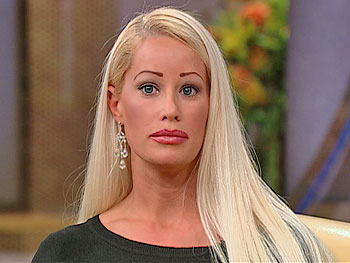
Another thing that really caught my attention about this lecture was the way we admire the natural human body as art, but are constantly trying to perfect it through things like plastic surgery. 


In the first picture we see the human body from a Body Worlds exhibit, something that we have admired as art for such a long time. The second picture is a woman "striving for perfection" through plastic surgery. This is where this lecture topic all really comes together: Through technological advances we have been able to medically alter the human body, to turn it into original pieces of art. Something that has always been looked at as unique, we can now alter to make art out of it. Technology really has advanced art so far, and it is so obvious through medical changes.

RESOURCES:

Heart Rate Monitor" Lifesyleaccelerator. unkown. Web. 27 Oct. 2013<http://lifestyleaccelerator.com/myblog/wp-content/uploads/2011/01/monitor.jpg>

Body Worlds Gymnast" Onmilwakee. Body Worlds. Web. 27 Oct. 2013<http://www.onmilwaukee.com/images/articles/bo/bodyworlds/bodyworlds_fullsize_story1.jpg?20080118091932>

Plastic Surgery Woman" OprahWinfreyShow. Unkown. Web. 27 Oct. 2013<http://static.oprah.com/images/tows/200502/20050208/20050208_101_350x263.jpg>

Vesna, Victoria. “Http://www.youtube.com/v/Ep0M2bOM9Tk.” Lecture. Medicine pt1 . Youtube, 21 Apr. 2012. Web. 25 Oct. 2012. <http://www.youtube.com/watch?v=Ep0M2bOM9Tk>.
Vesna, Victoria. “Http://www.youtube.com/v/FIX-9mXd3Y4.” Lecture. Medicine pt3. Youtube, 22 Apr. 2012. Web. 25 Oct. 2012. <http://www.youtube.com/watch?v=FIX-9mXd3Y4>.
Vesna, Victoria. “Http://www.youtube.com/v/psjnQarHOqQ.” Lecture. Medicine pt2 . Youtube, 21 Apr. 2012. Web. 25 Oct. 2012. <http://www.youtube.com/watch?v=psjnQarHOqQ>.

Sunday, October 20, 2013

Desma 9 Week 3 Blog

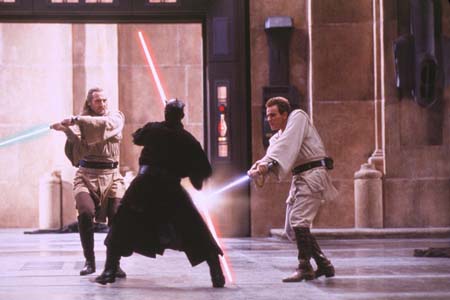
I have always been a strong believer in the fact that technology can very much so aid to more traditional art. Not only that, but that art created through technology can be a lot better because of the fact that mistakes can be corrected, or left be if the artist feels as though said mistake is not a mistake at all. Walter Benjamin says in his essay, “The Work of Art in the Age of Mechanical Reproduction”, That live theater has more depth than a movie shot on camera, just because the art is live and in front of you. I personally disagree with that, I believe there are so many more artistic values that can be expressed via movie, and the fact that everything can be perfected really shows how great the art is. Take one of my favorite movies, Star Wars, which uses unreal special effects to portray art.

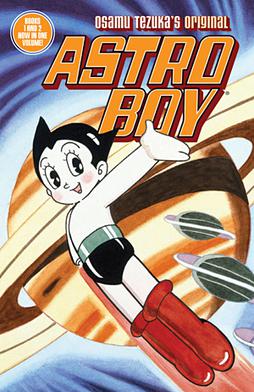
Another show and book I grew up loving as a kid is Astro Boy. It is a great japanese portrayal of a robot living in our time. However unlike lecture where we learned many robots were based around working, astro boy is more of a friendly robot based about helping people out. 

I think the best way that technology has helped art in todays society is with programs like Adobe Photoshop and illustrator, which give artists tools do improve their art vastly and be able to mass produce it. Yes, mass producing art does take away from the value of having an original, but it is always a good way to have more art up and around in society. For people who generally wouldn't buy art, mass producing is good to get them into the market of buying art because it is cheaper and more accepted. Take for example President Barrack Obama's campaign poster. A very simple piece of art made using technology, that helped convince over half a nation to elect their leader.

RESOURCES:
“Astro Boy” Wikipedia. Unknown, n.d. Web. 20 Oct. 2013. <http://upload.wikimedia.org/wikipedia/en/5/54/AstroBoyVolume1.jpg>
"Barack Obama HOPE Poster" Wikipedia. Shepard Fairey. Web. 20 Oct. 2013<http://upload.wikimedia.org/wikipedia/en/thumb/5/55/Barack_Obama_Hope_poster.jpg/399px-Barack_Obama_Hope_poster.jpg>
Benjamin, Walter. The Work of Art in the Age of Mechanical Reproduction. London: Penguin, 2008. Print.
“Star Wars Episode 1: The Phantom Menace” Web log post. The Reel McCoy. 9 May. 1999. Web. 20 Oct. 2013. <http://www.the-reel-mccoy.com/movies/1999/SW1_TPM.html>.
Vesna,Victoria. “Lecutre Part 2.” Math + Art. 12 Oct. 2012. Lecture.


Sunday, October 13, 2013

Math + Art Blog Assingment


I high school, I learned a lot in art class about perspectives and how they were related to math. In fact, my favorite part of art class was always coming up with the proper dimensions and perspectives before starting a drawing or painting. Math was always my favorite subject, and I loved using in in art projects. One of my favorite forms of mathematical art have always been fractals. Fractals have always impressed me by how beautiful of art math could really create. Also during lecture, I learned a lot more about the golden rectangle than I ever did in high school. I find it incredible that so many great pieces of art and buildings have perfectly followed the golden rectangle, and that the golden ratio is so commonly found. In Linda Henderson's article, "The Fourth Dimension and Non-Euclidean Geometry in Modern Art: Conclusion", she talks about how science and math theory do relate to art. When she mentions Einstein's theory of relativity it really opened up my brain into thinking about what other such famous mathematicians and scientists must have influenced art.
The picture above is one of my favorite fractals. It is such a beautiful piece of art and it is all entirely based off of a simple math ratio repeating itself. Whoever said that math and art don't correlate obviously has never seen such beautiful art like a fractal.
This week the main thing I learned about how artists use math in their paintings is through their perspectives.  How each painting or drawing needs to have a center point and all of the lines should go toward that in order to have all of the perspectives right. I think it is very interesting how math is needed to create the right lines and get the perspective of art right.
I would say this week has shown me that although math and art are very different, they compliment each other very well and each one can help the other become so much better.
Picture of 4 dimensions art show which uses math through the art and music to bring out the aesthetics
Origami, a Japanese art form that uses math through specifically folding the right angles on paper to create art. 


Resources:

Henderson, Linda. “The Fourth Dimension and Non-Euclidean Geometry in Modern Art: Conclusion.” MIT Press. 17.3 (1984): 205-10. Print.

Vesna, Victoria. “Math + Art.” Lecture 2.

Ench Gallery. http://www.enchgallery.com/fractals/fractalpages/jam%202.htm. 2011. Web. 

Nathan Selikoff. http://nathanselikoff.com/files/2013/06/nathan-selikoff-artwork-026.jpg 2012. Web. 

Design Beep http://designbeep.designbeep.netdna-cdn.com/wp-content/uploads/2010/02/27.origami-art.jpg 2009. Web. 

Sunday, October 6, 2013

Desma 9 Week 1

The idea of two cultures is something that I personally have dealt with my whole entire life. I attended High Tech High Media Arts, a school that used multimedia and media arts to display the knowledge we learned about math/science concepts learned in normal high schools. I personally feel like using art to explain what you know about math/science is a better way that current school curriculums because you actually have to conceptually understand whatever you are explaining. 
Coming to UCLA is a huge change for somebody like me, because now art and science are completely separated. In high school, I would go to science class, and then immediately after go to art and do some sort of art project about the science I learned. I think that this really helped created the "3rd culture" or more of the grey culture, that helped combine these two instead of creating the negative stereotypes associated with them. A good example of this is the "mac vs. pc" debate. South campus has always been more of a pc campus, and north campus being macs. With macs generally looking cleaner, much like north campuses architecture, and north campus computers being more boring, much like their architecture.

I think getting to this 3rd culture would save many types of art. For instance, a beautiful art form I personally enjoy is graffiti, which is generally associated with criminals, but one project I did in high school is follow around a graffiti artist day to day, and he was just a normal person with nowhere legal to express his medium of art. 
Another art form, tattoos, have a very negative stereotype related to them, but can also be very artistic.
I'm excited to take this class and try to help the world reach a level of combining the two cultures, because I believe if we can combine the two we could really improve a lot of aspects of the world.

SOURCES:
Art&ScienceTattoo. 2010. Photograph. unknown. Web. <http://hobbesdutt.com/blog/wp-content/uploads/2011/10/ArtvSci.jpg>
Mac vs. PC. 2011. Photograph. HobbesDutt. Web. <http://hobbesdutt.com/blog/wp-content/uploads/2011/10/ArtvSci.jpg>
Graffiti. 2011. Photograph. Neil Baffert.Web. <https://blogger.googleusercontent.com/img/b/R29vZ2xl/AVvXsEgr1v55HIE3IYNwwpkeI78ia5NnOPhrXsDuC1Qg6K5hVpyIA0WsMdH5YKFBVEBPRRpMychAZxyow05LCE7yFGysjYBsYNHV4Cy9XEP4B1NBqMM8U5pBnsvalVV2kDyI1pyaGXU0z3oGuhbx/s1600/sickness.JPG>
Snow, C. P. “Two Cultures and the Scientific Revolution.” Reading. 1959. New York: Cambridge UP, 1961. Print.
Vesna, Victoria. “Lecture: Design and Media Arts 9.” University of California, Los Angeles, Los Angeles. October 2013.